
National Safe Work: How the Automotive Industry Manages EV Work Safely
Industry News & Updates
Industry News & Updates
October 2026
Electric vehicles are becoming an increasingly common sight in Australian workshops. While EVs introduce different hazards to traditional petrol and diesel vehicles, they also demonstrate how the automotive industry continues to adapt, train and innovate to keep people safe.
October is National Safe Work Month, and this year’s theme, Safe work is for life, highlights the importance of ensuring workers have the knowledge, skills and systems they need to perform their jobs safely every day.
When people hear about EV safety, conversations often focus on high-voltage batteries. While these systems require specialised procedures, the reality is that modern workshops follow strict controls designed to manage risks effectively.
Safety Starts with Training
One of the most important safety measures in any workplace is ensuring workers understand the risks associated with their tasks.
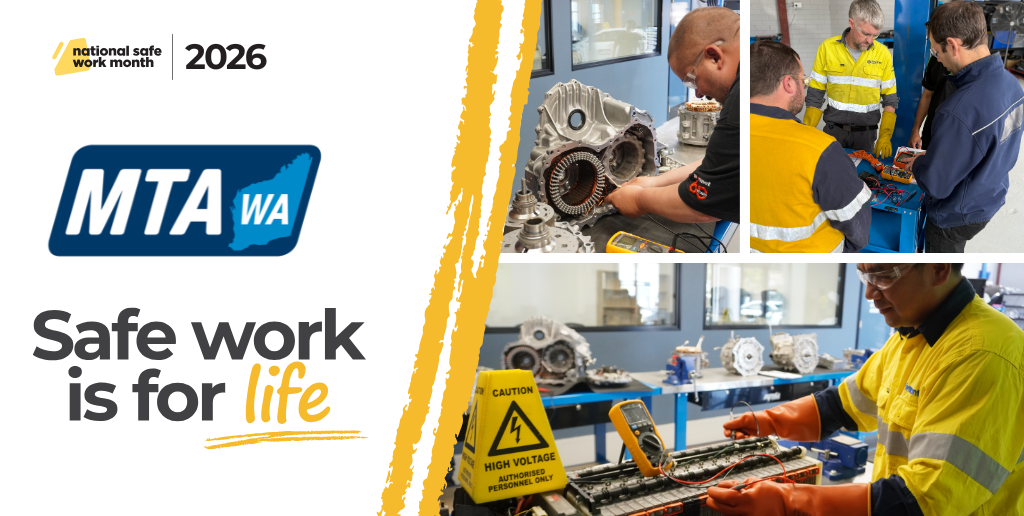
For EVs, technicians need specialised training to safely identify, isolate and work around high-voltage systems. Unlike traditional vehicles, EVs can contain electrical systems operating at hundreds of volts, making it essential that workers understand correct procedures before commencing work.
Training covers:
- Safe isolation of high-voltage systems
- Use of specialised tools and personal protective equipment
- Identification of damaged battery systems
- Emergency response procedures
- Manufacturer-specific repair requirements
- The purpose and operation of EV components
Safety starts with knowledge, which is why MTA WA ensures every automotive apprentice completing training through our programs receives EV safety training. In many cases, apprentices enter workshops with current EV safety knowledge and awareness that can assist businesses as they continue adapting to new vehicle technologies.
Training is delivered in accordance with nationally recognised units of competency, Australian Standard AS 5732:2022 and manufacturer (OEM) repair procedures, ensuring technicians understand both the safety requirements and the practical application of working on modern electric vehicles. Training pathways for EV technicians include units such as AURETH101 and AURETH011, which cover hazard identification, safe isolation procedures, personal protective equipment requirements and high-voltage system safety.
EV Technology Requires Both Traditional and New Skills
While EVs introduce new high-voltage systems, they have not replaced traditional automotive technology entirely.
Modern electric vehicles still incorporate braking systems, steering systems, suspension components, air conditioning, advanced driver assistance systems and complex electronic networks. High-voltage components are heavily integrated with these traditional vehicle systems, meaning technicians must be competent in both conventional automotive diagnostics and emerging EV technologies.
The industry’s ability to safely work on electrified vehicles has not happened overnight. Automotive technicians have been servicing hybrid and high-voltage vehicle systems for more than 25 years, continually developing the skills, procedures and safety practices required to manage evolving technologies. Today’s battery electric vehicles build on that existing foundation of knowledge and experience.
Procedures Matter
Safe EV work relies on a combination of Australian Standards, nationally recognised training and vehicle manufacturer requirements. Industry best practice requires technicians to follow Australian Standard AS 5732:2022, which outlines requirements for electric vehicle operations, maintenance and repair, while also complying with model-specific OEM procedures.
Before any repair work begins, technicians must identify whether a vehicle contains a high-voltage system and determine the appropriate control measures. In many cases, this involves isolating the system and verifying that it is safe before work commences.
Workshops also establish designated areas for certain EV tasks, use warning signage and ensure only appropriately trained personnel carry out high-voltage work.
These aren’t simply recommendations. They form part of structured safety processes designed to protect workers, customers and businesses.
Managing Battery Risks
Lithium-ion batteries are highly reliable, but like any energy storage system, they require careful handling when damaged.
A vehicle involved in a collision, flood event or fire may require additional assessment before repairs begin. Technicians are trained to recognise warning signs such as battery damage, unusual heat, swelling, smoke or fluid leakage.
Workshops also invest in specialised safety equipment designed for EV environments, including insulated tools, personal protective equipment, rescue equipment and thermal monitoring systems. Access to the correct equipment is an important part of creating safe workplaces as EV numbers continue to grow. Workshops may also have dedicated procedures for monitoring, quarantining or storing damaged batteries where required.
The goal is straightforward: identify hazards early and manage them before they become a risk.
Supporting Workshops to Prepare for EVs
As more EVs enter Australian workshops, businesses need access not only to training, but also to the right equipment and resources to support safe work practices.
Through its partnership with Volt Safety, MTA WA is helping automotive businesses access specialist EV safety equipment, including personal protective equipment, insulated tooling and workshop safety products designed specifically for high-voltage vehicle environments.
By combining training, procedures and appropriate equipment, automotive businesses can confidently and safely service the next generation of vehicles.
Safety is an Industry-Wide Commitment
The automotive industry has a long history of adapting to new technology. From airbags and advanced driver assistance systems to hybrid and electric vehicles, each innovation has brought new training requirements and safety practices.
EVs are no different.
Across Australia, manufacturers, training organisations, industry associations and automotive businesses are working together to ensure technicians remain up to date with evolving technology and safety expectations.
This commitment helps ensure that the transition to low-emission vehicle technologies is supported by a workforce equipped with the right skills and knowledge.
Building the Future Safely
As the automotive industry evolves, safety must evolve alongside it.
National Safe Work Month provides an opportunity to recognise the importance of training, continuous learning and strong workplace procedures in protecting automotive workers.
For businesses embracing EV technology, investing in training and safe work practices is not simply about compliance. It is about building confidence, supporting employees and ensuring the industry is ready for the future.
As Western Australia’s leading provider of automotive EV training, MTA WA is committed to ensuring apprentices, technicians and businesses have the skills, knowledge and equipment required to work safely with electric vehicles. Through nationally recognised training aligned to Australian Standard AS 5732:2022, OEM repair procedures and industry best practice, we are helping build a workforce that is ready for the future of automotive technology.
If you are interested in upskilling in EV, visit our EV Training page