
National Safe Work Month: Practical Steps for Automotive Workplaces
Industry News & Updates
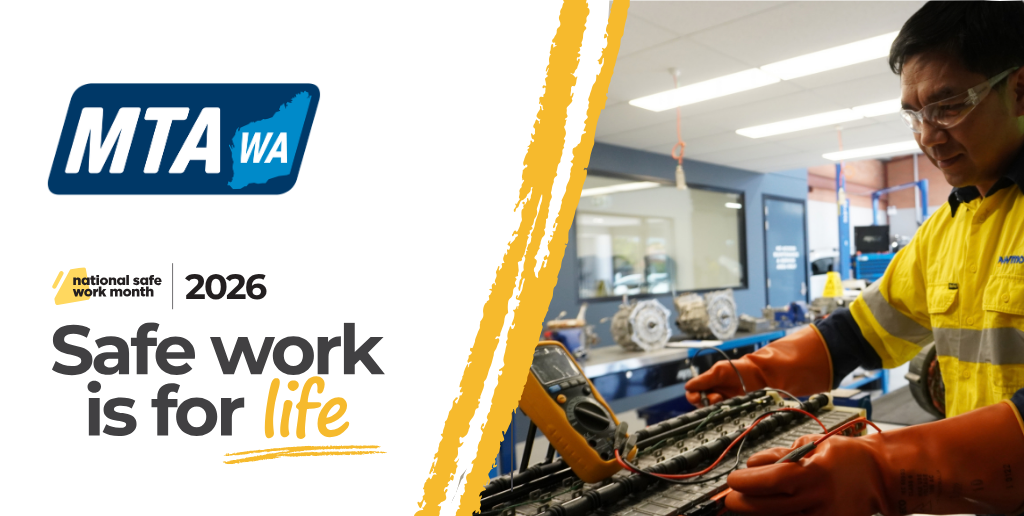
In a busy workshop, everyday hazards can easily blend into the background. A hose across a walkway, an awkward lift or a rushed job might feel like part of the routine…but that doesn’t make it safe.
October is National Safe Work Month. This year’s theme, Safe work is for life, is a timely reminder that good safety practices protect more than the person finishing a shift. They help people stay healthy, keep working and enjoy life outside the workplace.
For automotive businesses, this month is a chance to step back and see how work really happens. Talk to the people doing the job, identify the pressure points and make improvements that will last beyond October.
1 to 11 October – Take a fresh look at familiar risks
Start with a quick team conversation: what are 3 things most likely to seriously hurt someone in your workplace? Depending on the business, the answer might include moving vehicles, work under raised vehicles, machinery, heavy components or electrical hazards.
Then ask which risks have become so familiar that people barely notice them. Is equipment difficult to access? Are people cutting through vehicle movement areas? Do apprentices feel comfortable asking for help with an unfamiliar job? A procedure matters, but it also must work when the workshop is flat out.
Choose one issue to address, assign responsibility and set a date to check the result.
12 to 18 October – Look after health, not just injuries
Not every workplace injury happens in a single moment. Noise, awkward lifting, dust, fumes and chemicals can affect people over time, so these hazards need the same attention as the ones that are immediately visible.
Take a fresh look at a regular job. Could awkward reaching or heavy force be reduced? Is lifting equipment nearby? Are controls for dust and fumes maintained? Personal protective equipment matters, but wherever possible, deal with the risk at its source.
Mental health is also part of workplace safety. Tight deadlines, poor support, bullying and aggressive customers can affect people from the workshop to the office. Ask whether your team has the time and support to work safely and feels comfortable speaking up.
Apprentices may need more time, a clearer explanation or extra supervision while they build their skills. Make it clear that questions are welcome and hazards should be reported, even when the workshop is busy.
19 to 25 October – Stop recurring hazards at the source
A slip on an oily floor or a trip over an air hose can result in significant, long lasting aftereffects . Rather than simply reminding people to watch their step, ask why the hazard keeps coming back.
Walk through the workshop, parts store, wash area and customer access routes with fresh eyes. Look for recurring leaks, trailing hoses or leads, parts stored in walkways, uneven surfaces and poorly lit areas. Could better storage, equipment placement, drainage or maintenance stop the problem from returning? Also check that spills are dealt with quickly and safely.
It’s also worth checking what happens if someone is injured or becomes unwell. Do they know who to tell? Who will coordinate support? Can suitable duties be arranged in line with medical advice? Early reporting, respectful communication and sensible adjustments can support recovery. Pressuring someone to push through an injury can make things worse.
26 to 31 October – Make the improvements stick
Bring the team back together and look at what changed during the month. Did new arrangements make jobs easier and safer? Have the hazards returned? Is anything still waiting to be fixed?
Keep what works, assign a responsible person and due date to unfinished actions, and set a November follow up. Include apprentices and people from across the business so the review reflects different roles and work areas.
Start with one useful conversation
You don’t need a major event to take part in National Safe Work Month. Set aside 15 minutes, ask your team what needs attention and act on one practical issue. What matters is building a workplace where speaking up leads to action and safer work becomes routine.