
Auto China 2026: EV Technology Trends Every Australian Technician Should Know
Events & Networking
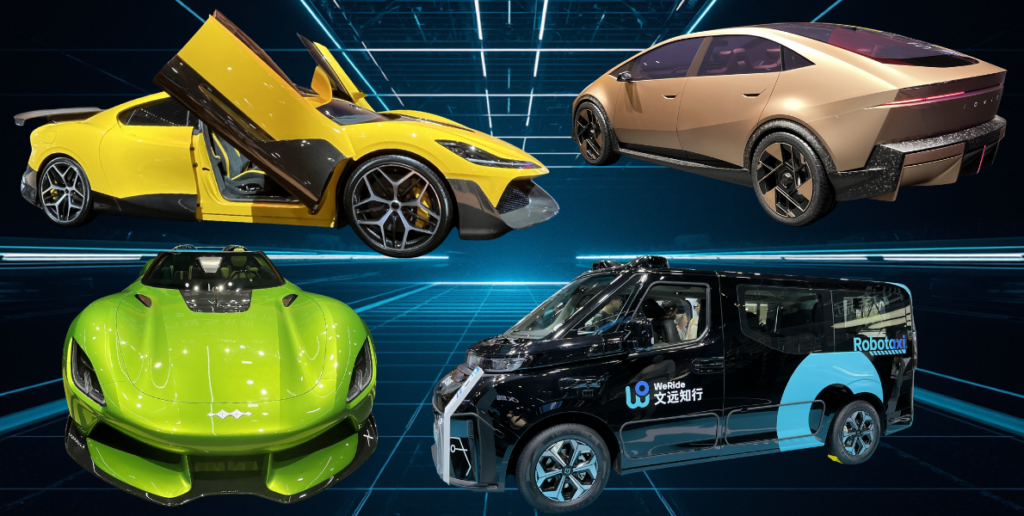
What Auto China Reveals About the Future of Australia’s Automotive Industry
Earlier this year, MTA WA Chief Executive Officer Neil Le Febvre and COO Rhona Varkevisser attended Auto China in Beijing – the world’s largest automotive show. Here’s what they learned about where the global industry is heading, and what it means for Western Australia.
The Scale is Staggering
Auto China is difficult to overstate. The 2026 event featured over 1,450 vehicles on display, 181 world premieres, 71 concept cars and nearly 1,000 exhibitors from 21 countries. The exhibition space alone spanned 20 football fields, and the show attracted nearly 1.3 million visitors.
But the numbers only tell part of the story.
What stood out most wasn’t simply the scale – it was the speed of change and innovation on display. The pace of industrial transformation and the intensity with which China is reshaping the global automotive landscape is extraordinary.
Chinese Manufacturers Are No Longer Catching Up -They’re Leading
For years, many have viewed Chinese vehicles through the lens of affordability alone. Auto China demonstrated just how outdated that thinking has become.
The quality, safety, sophistication and technology on display were often comparable with – and in many cases, ahead of – established global brands. Chinese manufacturers aren’t trying to catch up anymore. In electrification, battery technology, software integration and AI-enabled systems, they’re driving the pace.
What’s remarkable is the speed at which this is happening. While traditional vehicle development takes four or five years from concept to market, Chinese manufacturers are taking ideas straight into production – akin to fast fashion. This “China speed” is a real competitive advantage.
The Era of Intelligence Has Begun
One of the major themes at the show was the industry’s shift beyond electrification alone into what many described as the “era of intelligence” – where software, AI, connectivity and autonomous systems become the defining competitive battlegrounds.
Software capability is rapidly becoming as important as mechanical engineering.
This was visible everywhere: vehicles with advanced autonomous functions, AI-powered cabin systems that monitor driver behaviour and wellbeing, and voice-controlled systems deeply integrated into the user experience. Vehicles are increasingly behaving like connected smart devices rather than traditional cars.
The Investment Behind the Transformation
The investment China is making in this transformation is remarkable. During a visit to BAIC Group, a major Chinese manufacturer, Neil learned they have around 5,000 staff dedicated to research and development – with approximately 80 per cent holding a master’s degree or doctorate qualification.
The integration of advanced manufacturing, software engineering, battery development and AI into vehicle manufacturing highlights a critical reality: the future automotive workforce will require a very different mix of skills than the industry demanded even a decade ago.
What This Means for Australia
Australia cannot afford to sit on the sidelines while the global industry evolves around us. While we cannot compete directly against Chinese manufacturing might, Australia’s opportunity lies in what differentiates us: trusted service, technical expertise, strong regulatory frameworks, safety standards, customer relationships and workforce capability.
This is particularly relevant for the automotive retail and service sectors.
EV Training is No Longer Optional
For MTA WA members, one issue became crystal clear at Auto China: investment in EV and advanced technology training is no longer a future consideration – it’s a current necessity.
Electric vehicles represented close to 80 per cent of new models presented at the show. China alone produced more than 16.5 million new energy vehicles in 2025.
Whether Australian consumers transition to EVs quickly or gradually almost becomes secondary to the broader point: the technology entering our market is increasingly electrified, software-defined and highly sophisticated.
Servicing high-voltage systems safely demands specialised EV automotive skills. Working with AI-enabled autonomous features and increasingly connected vehicles will reshape the nature of automotive work itself.
This is why MTA WA’s investment in EV training matters so much. We remain the only Registered Training Organisation in Western Australia offering the Cert III Apprenticeship in EV technology, and demand for our EV upskilling courses continues to grow.
The Bottom Line
The future of the automotive industry isn’t approaching slowly. It has already arrived.
For Australia, this presents both disruption and opportunity. Key priorities must include continued investment in training and apprenticeships, building advanced technical capability, helping workshops and dealerships adapt to this changing landscape and ensuring our regulatory settings remain fit for purpose.
Most importantly, we must remain open to change rather than resisting it.